Before you drive anywhere, you read a number plate from 20 metres away. Learn how the check works, what happens if you misread a plate and how to test yourself weeks before.
The eye test on your driving test comes before you drive: you read the number plate of a parked car from 20 metres away, or 20.5 metres for an old style plate. Wear glasses or contact lenses if you need them. If you still cannot read a plate after three tries, you fail and the test ends.
The eyesight check happens at the start, after the examiner has checked your licence and before your tell me question. The examiner points out a parked car and asks you to read its number plate out loud.
The distance depends on the type of plate:
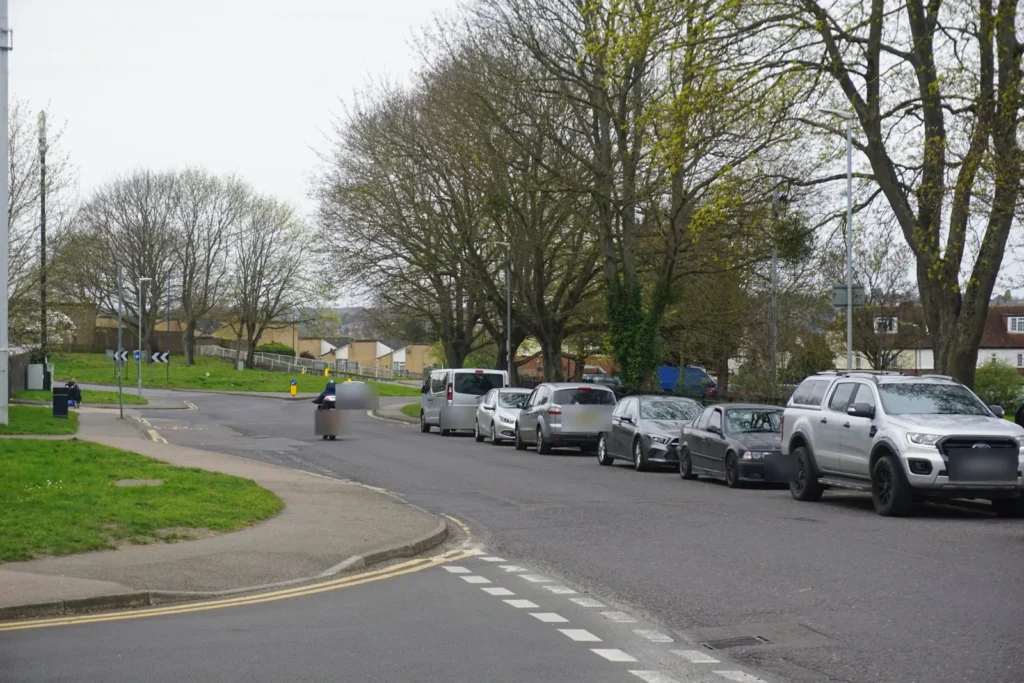
GOV.UK describes 20 metres as about the length of 5 parked cars. Examiners must carry out the check in good daylight, and their guidance says you must never be asked to read a plate from closer than 20 metres.
One wrong answer does not fail you. The examiner guidance sets out up to three plates:
If you still cannot read it correctly, the examiner tells you that you have not passed, and the test ends there.
If you have dyslexia, tell the examiner. Their guidance says writing down the letters and numbers, instead of reading them out, is a reasonable adjustment.
The eyesight check is not marked like the rest of the drive. It is pass or fail on its own. The driving that follows is marked with driving, serious and dangerous faults, which our guide to driving test faults explains.
Failing it means you fail the driving test, and the test does not continue. DVLA, the agency that issues licences, is told and your licence is revoked.
To drive again, you reapply for your licence. DVLA then asks you to take an eyesight test with DVSA at a driving test centre. Even after that, you must pass the normal eyesight check at the start of your next practical test.
So if you have any doubt about your eyes, deal with it well before test day, not on it.
The number plate is the part you see on test day, but the legal standard goes further. GOV.UK says every car driver must:
An optician can test your visual acuity and your field of vision. You must also tell DVLA about any eyesight problem that affects both of your eyes, or your remaining eye if you only have one. Short sight, long sight and colour blindness do not need to be reported.
You could be prosecuted for driving without meeting the standard, so this matters long after your test.
If you need glasses or contact lenses to read the plate, wear them for the check. The law then says you must wear them every time you drive.
The examiner guidance is strict about this on the day. If you read the plate with glasses and then take them off during the drive, the examiner tells you the test will be stopped unless you wear them. If you cannot read the plate and explain that you forgot, lost or broke your glasses, the test is stopped.
Keep your glasses clean and pack them with your licence the night before. Our list of what to bring to your driving test covers everything else.
Do this weeks before your test, not the night before.
Reading plates and signs early helps on the drive too. The sooner you see a sign, the sooner you can plan your lane and speed.
On the day, the check happens near the test centre, so it helps if the place already feels familiar. You can find your test centre on Testroute and watch the roads around it in 4K before your lessons there.
The eyesight check is one of several checks at the start of the test. Our minute by minute guide to how long a driving test takes covers what comes next, and how to pass your driving test covers the whole plan. After the eyesight check comes the tell me question: you can practise the show me tell me questions for free.
You fail the driving test and it ends there. DVLA is told and your licence is revoked, so you reapply, take an eyesight test with DVSA and pass the check again at your next test.
Yes. If you need them to read the plate, wear them, and you must then wear them every time you drive.
About the length of 5 parked cars. Old style plates are read from 20.5 metres.
Examiners must use good daylight, and if the light is not good enough, their guidance says a misread plate should not count as a fail. In September 2026 DVSA said it is updating its guidance so tests can be booked in poor natural light where suitable artificial lighting is available for a fair check.
It is not required, but it is sensible if you have any doubt. An optician can check your eyesight against the driving standard, including your field of vision.
Last checked: 13 October 2026.
