Mirror, signal, manoeuvre: the routine examiners watch for
Use the mirror, signal, manoeuvre routine the way examiners expect: which mirror to check first, when to signal, and how position, speed and look finish the job safely.
4 min read·Beginner
TRWritten by the Testroute teamChecked against DVSA guidance and The Highway Code · Updated 13/10/2026
Mirror, signal, manoeuvre is the routine the Highway Code asks for before you change speed or direction: check your mirrors, signal if it would help others, then act. DVSA pairs it with position, speed, look, often shortened to MSPSL. Examiners mark mirror checks that come late or not at all.
Mirror, signal, manoeuvre step by step
Mirror: check the interior mirror, then the door mirror on the side you are moving towards. Do it in good time, before you signal or change speed or direction (rule 161).
Signal: signal if it would help or warn anyone, clearly and in good time, and never where it could mislead (rule 103).
Position: move to the right place on the road for what you are about to do.
Speed: slow down and choose the right gear.
Look: look into the new road or lane, decide, and go only when it is safe.
Mirrors have blind spots, so look round as well when you move off or change lanes (rules 159 and 161).
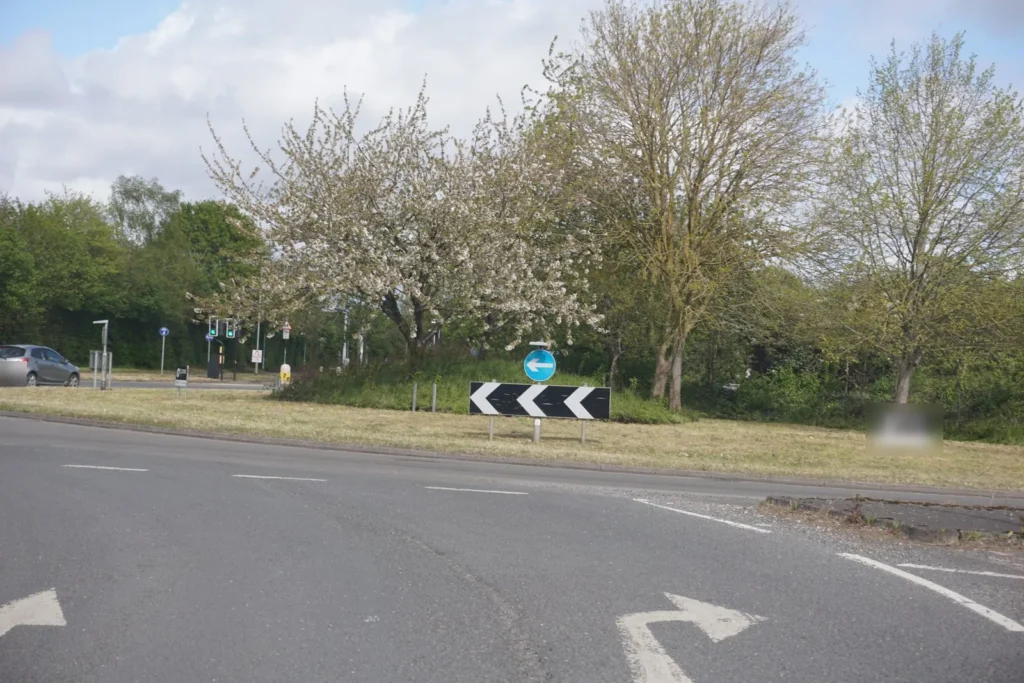
The full routine: mirror, signal, position, speed, look.Lane arrows on the approach to a roundabout in Somerset, April 2026
Which mirror, and when
Turning left: interior mirror, then the left door mirror, watching for cyclists on your left.
Turning right: interior mirror, then the right door mirror, for anyone about to overtake.
Changing lanes: mirrors, a quick look over your shoulder if needed, then signal (rule 133).
Slowing down or stopping: interior mirror first, so you know what is behind you.
Moving off: all mirrors, a look over your right shoulder, then once more before you go (rule 159).
Roundabouts: mirrors on the approach, and again before you signal left to leave (rules 184 and 186). Our roundabout rules guide covers the lanes and signals.
Your test centreFind your test centreSee the roads learners around it drive most often, filmed in 4K from the driver's seat.
The examiner wants to see you use the interior and door mirrors when you change direction, change lanes and change speed. Typical faults on the result include:
checking the mirrors after you signal, or at the same moment
changing lanes on a roundabout or dual carriageway without checking the mirrors properly
signalling but not turning, or signalling right at a roundabout when you are going ahead
signalling too late to be useful
Not using mirrors correctly when changing direction was the second most common reason for failing in DVSA's list for April 2024 to March 2025. A fault repeated often enough can become a serious one; see how minor, serious and dangerous faults are graded.
You do not need to exaggerate your head movements. Examiners are trained to see whether you really looked.
A two lane dual carriageway with a central barrier, seen through the windscreen, March 2026
Make the routine automatic
The routine only protects you if it happens without thinking. For a week of lessons, say the five steps in your head at every junction until the order sticks.
Mirror, signal, position, speed, look. DVSA's learning guidance pairs the mirror, signal, manoeuvre routine with position, speed, look.
Do you always have to signal?
No. Signal when it would help or warn other road users. DVSA expects you to recognise when a signal is not needed, and Highway Code rule 103 says never to give one that could mislead.
Should you check your mirrors before slowing down?
Yes. Rule 161 says to check your mirrors in good time before you change speed, so you know what is behind you before you brake.