Reverse into a bay and finish inside the lines: where to stop before you steer, when to straighten, what to check all around, and how to correct a bay park that is going wrong.
Reverse bay parking on your test means backing into a marked bay of your choice in the test centre car park and finishing inside the lines. Stop when your reference line reaches your door mirror, steer as the car rolls back, straighten when the car is parallel with the lines, and keep looking all around.
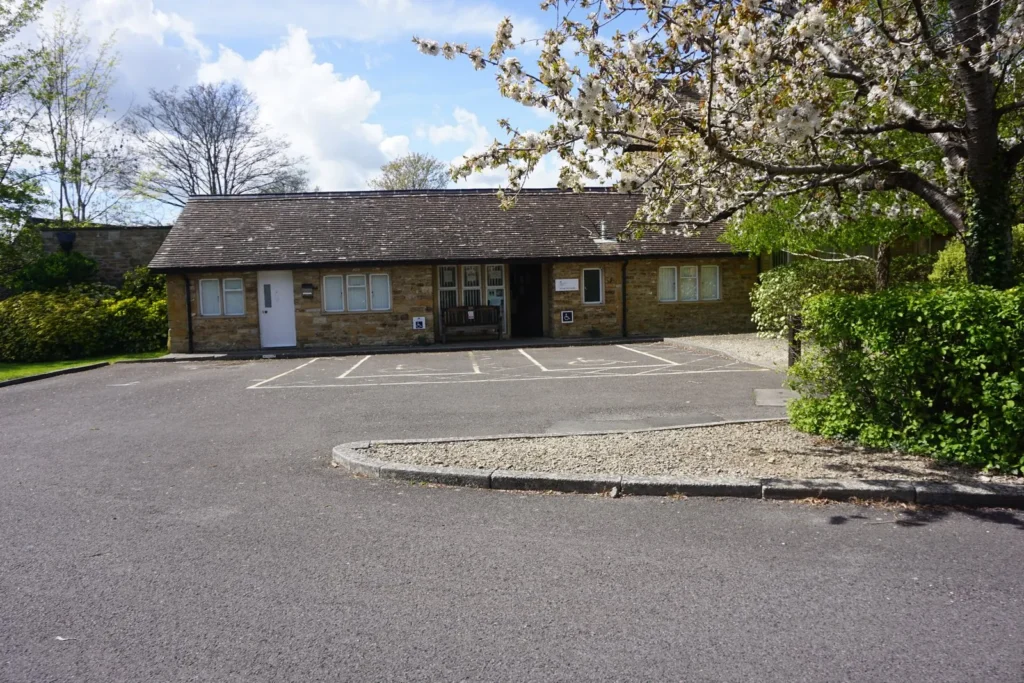
Reverse bay parking takes place in the test centre car park, so it comes at the start or the end of your test. Examiners choose between the reversing exercises and should use each one equally over time, so you cannot predict which you will get.
If your car is parked in a bay, the examiner asks you to pull forward out of it, to the left or the right, and stop with your wheels straight. Then you reverse into any convenient bay. The straight wheels stop you simply reversing back in on the same lock, but some attempt to straighten is enough.
The examiner asks you to drive into the car park and reverse into any convenient bay.
Either way, you choose the bay. You must finish within a bay, but examiners are told not to ask you to park in the centre of it. Faults are recorded under the heading Reverse park once you select reverse.
Bay parking can also be set the other way round, as forward bay parking: drive in, reverse out, which normally happens in a car park along the route.
This method is for a bay on your left. For a bay on the right, mirror it and use your right door mirror. Reference points depend on your car and your seat, so your instructor will adjust these for you.
In practice sessions, get out and look at where you finished. It is the quickest way to learn what your reference points mean in your car.
Go slower than you think you need to. In a manual, hold the clutch near the biting point and let the car creep. In an automatic, release the footbrake gently and let the car creep, using the brake to keep it slow. If the car park slopes, the car may roll faster in one direction, so cover the footbrake.
The slower the car moves, the more time you have to steer fully and to look around between each movement. Steer briskly, move slowly. Stalling and poor co-ordination of the controls are both listed faults.
Car parks are busy at walking pace. People step out between parked cars, children run ahead of their parents and drivers reverse out without seeing you. The Highway Code tells you to reverse slowly while checking all around, looking mainly through the rear window, and to remember that the front of your car swings out as you turn (rule 202).
Do a full check before the car moves, then keep checking as you go: the rear window most of the time, the mirrors for the lines, and over both shoulders before each change of steering.
If someone walks behind you or a car comes along the aisle, stop. Once they have passed or have clearly stopped for you, carry on. The examiner guidance lists both looking but not reacting and waiting too long for other car park users as faults, so react, then get going again. For more on blind spots, see observation on your driving test.
The examiner wants accurate control into a bay and effective all-round observation throughout, with consideration for other people in the car park. The examiner guidance lists these faults:
Repositioning to correct a loss of control or accuracy is the guidance's example of a driving fault. Excessive repositioning after a complete misjudgement is a serious fault, and so is finishing outside the bay. Anything that causes actual danger is a dangerous fault. In exceptional cases, the examiner may get out of the car to check your position before marking it.
Up to 15 driving faults and no serious or dangerous faults is a pass. Our guide to driving test faults and how they are graded explains the rest.
If you can see you are going to finish across a line, stop before it happens. A correction is usually marked as a driving fault, while finishing outside the bay is a serious fault, so correcting is the right call.
At the start of the test, the examiner guidance also lets you drive forward to change the angle you approach the bay from. If there is space, you may even drive forwards into one bay and then reverse straight back into the bay opposite. Ask your instructor to show you this method, as it is a useful plan B in a tight car park.
Keep it to one or two calm corrections. Lots of back and forth is a listed fault.
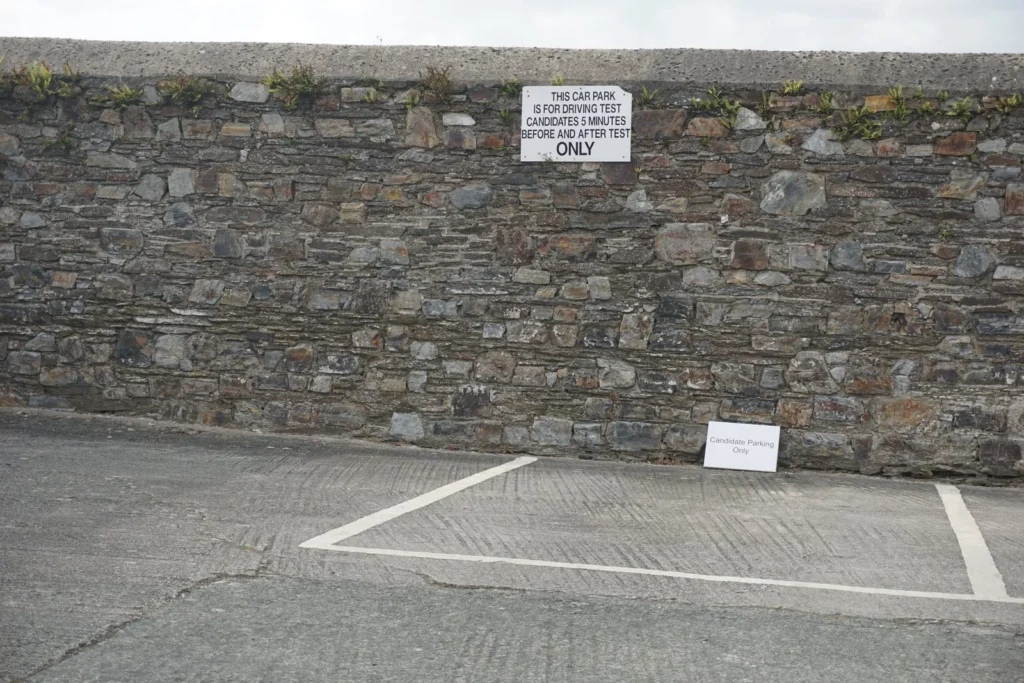
Practise in quiet car parks first, early in the morning or late in the evening, then in busier ones. Practise bays on both sides, and in car parks with narrow bays, pillars or a slope.
If the bay park comes at the start, it is the first thing the examiner sees and your nerves may be at their highest. A settled routine helps, and so do these tips to calm driving test nerves.
You can watch the reverse bay park filmed in 4K. Once you leave the car park, the rest of the test is on the roads around your test centre: find your test centre and watch them before the day. For the full plan, read how to pass your driving test.
It can be either. It is done in the test centre car park, so the examiner sets it before you drive out or when you come back.
Yes. Examiners should let you reverse into any convenient empty bay, and they should not ask you to park in the centre of it.
The best ones are those your instructor sets for your car. A common starting point is to stop when the third line lines up with your door mirror, steer to full lock as the car moves, and straighten when the lines look parallel in both mirrors.
Finishing outside the bay is a serious fault, and straddling two bays is a listed fault. If you see it coming, stop and correct, as repositioning is usually marked as a driving fault.
Yes. Stop, look all around, drive forward to straighten up and reverse in again. A correction is usually a driving fault, but excessive repositioning after a complete misjudgement is a serious fault.
Last checked: 13 October 2026.
