See the 10 most common reasons car tests are failed in DVSA's latest published list, what each one looks like on the road and the habits that keep you clear of them.
The top 10 reasons to fail the driving test, in DVSA's latest published list (April 2024 to March 2025), are led by poor observation at junctions, poor use of mirrors and not moving off safely. The rest cover positioning, traffic lights, steering, road markings, signs and speed. Each one is a habit you can fix.
DVSA publishes the most common reasons car tests are failed in Great Britain. The current list covers tests taken between April 2024 and March 2025 and was last updated on 14 August 2025. It gives the order only, with no counts or percentages.
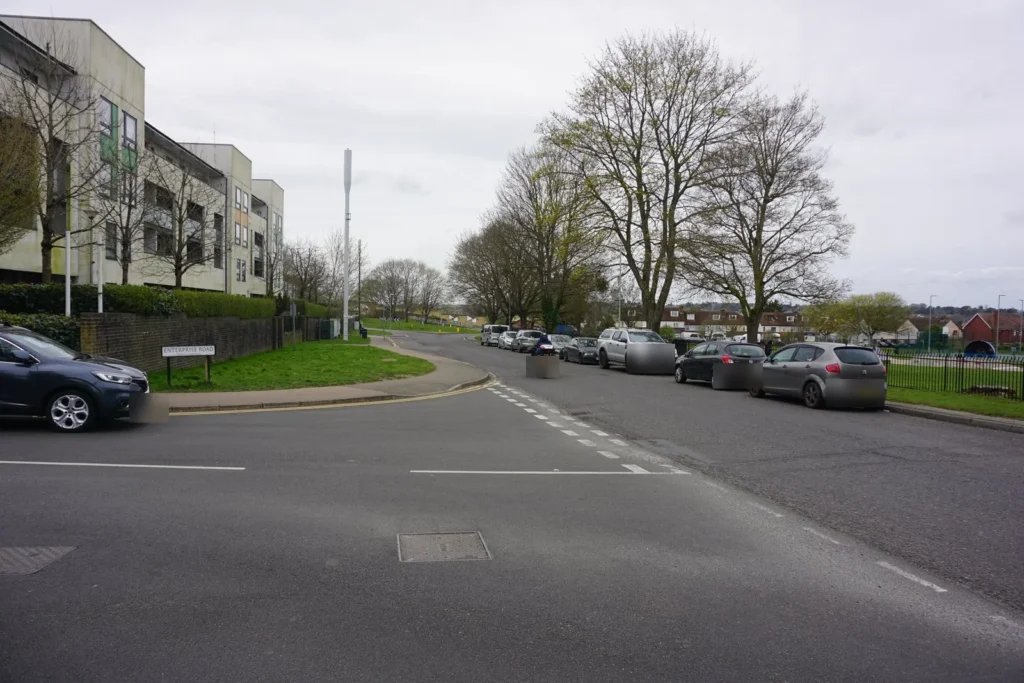
DVSA examples: pulling out without judging the speed of an approaching vehicle, going onto a roundabout when a vehicle is coming from the right, looking late or not at all, joining a dual carriageway from a slip road without checking, and crossing a crossroads without looking.
To avoid it, slow down early so you have time to look. Look both ways, judge speed as well as distance, and only go when the gap is big enough. See who has priority at junctions for T junctions and crossroads. DVSA says ineffective observation by a driver, rider or pedestrian was a factor in 47% of all collisions in 2023.
This means not checking mirrors before you signal, change direction or change speed. Examples include leaving a roundabout without a mirror check and changing lanes into the path of another vehicle.
To avoid it, use the same order every time: mirrors, then signal, then move. Before you leave a roundabout, check your left door mirror for cyclists and cars alongside. Our guide to mirror, signal, manoeuvre breaks the routine down.
Examples include pulling out in front of approaching traffic, skipping the blind spot check, pulling into traffic after the pull up on the right exercise, and not looking behind after the emergency stop.
To avoid it, check your mirrors and look over your shoulder before every move off, signal if it helps others, and go only when the gap is safe. Our guide to blind spot checks and mirrors shows when to look and where.
DVSA wants the car as close to the centre of the road as is safe. Faults include using the wrong lane to turn right at a roundabout, waiting too far left so traffic behind cannot pass, and keeping left when turning right at the end of a road.
To avoid it, check your mirrors, signal and move to just left of the centre line in good time. At roundabouts, approach in the right lane for a right turn unless markings say otherwise. Our roundabout lanes and signals guide covers each exit.
Examples include going through a red light, stopping past the advanced stop line for cyclists, blocking a junction when turning right, sitting at a clear green light, and going on green into a junction that is not clear.
To avoid it, expect the lights to change as you approach and be ready to stop. At an advanced stop line, stop at the first white line if the lights are amber or red (rule 178). On green, go only if there is room to clear the junction (rule 176).
Examples include not steering enough on left turns or bends, steering late on a right turn into a side road, mounting the pavement when pulling up on the left, and steering late round parked cars.
To avoid it, slow down before the turn so you have time to steer, keep both hands on the wheel where possible, and look where you want the car to go.
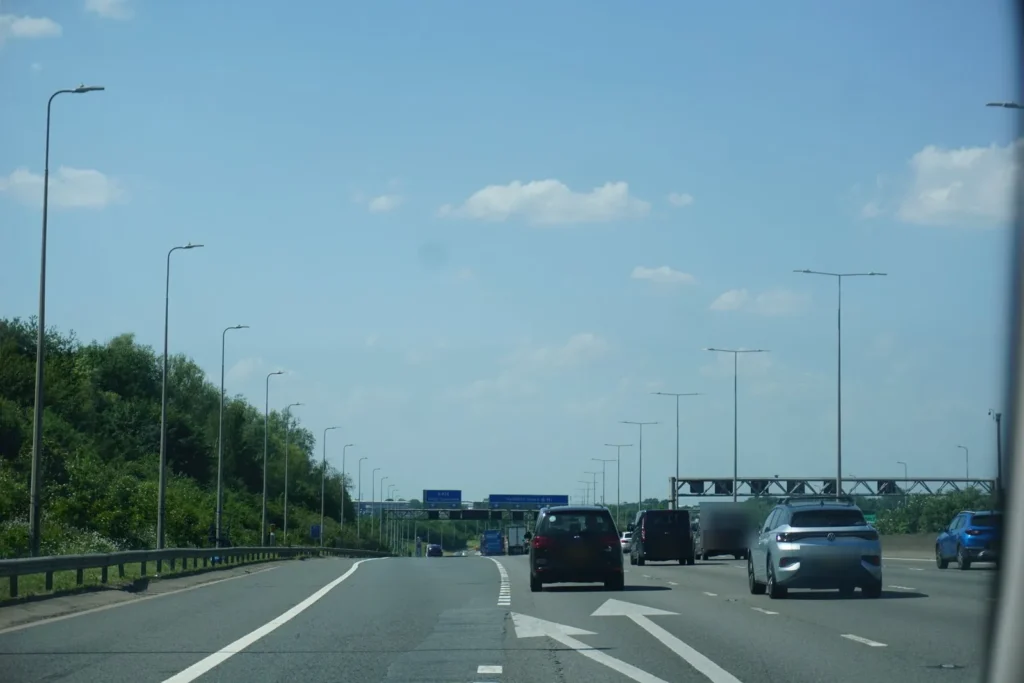
Examples include ignoring lane arrows, straddling lanes on a roundabout, crossing a solid white line when you should not, entering a box junction when your exit is not clear, and not following the markings at a mini roundabout.
To avoid it, read the road surface well ahead and pick your lane early. Learn the yellow box junction rules and how to drive round the central marking of a mini roundabout.
Examples include passing the wrong side of a keep left sign, ignoring a stop or no entry sign, driving in a bus lane when it is in use, choosing the wrong lane at a signed roundabout, and reacting late to a new speed limit.
To avoid it, scan for signs early and say them out loud on lessons. Check bus lane times and signs, and test yourself on our free UK road signs and meanings.
Examples include driving too close to the kerb or the centre line, staying in the right lane of a dual carriageway for no reason, and cutting straight across a roundabout with no lane markings.
To avoid it, keep to the middle of your lane and keep left unless signs or markings say otherwise. On a two lane dual carriageway, use the right lane only to overtake or turn right. See lane discipline on dual carriageways.
Examples include going over a reduced or temporary limit, not slowing for a busy street or bad weather, and taking a sharp bend too fast on a national speed limit road.
To avoid it, drive at a speed where you can stop well within the distance you can see to be clear. The limit is a maximum, not a target. See the national speed limit on each type of road.
The examiner records each mistake as a driving fault, a serious fault or a dangerous fault. You pass with up to 15 driving faults and no serious or dangerous ones, so one serious or dangerous fault, or 16 driving faults, means a fail.
Repeats matter too. GOV.UK says that if you keep making the same driving fault, it could become a serious fault. Read how driving test faults are marked for the pass mark in full.
Not on the list page yet. DVSA's statistics include a top 10 faults table, DRT121F, which was updated on 25 June 2026 with data to March 2026. When we last checked, on 13 October 2026, the list page still showed April 2024 to March 2025, so the order for April 2025 to March 2026 may differ. Check the date on the list page before you rely on the order.
Not making effective observations at junctions. It tops DVSA's list for April 2024 to March 2025, ahead of not using mirrors correctly when changing direction.
The list page gives the order only. DVSA also publishes a top 10 faults table, DRT121F, in its car test statistics.
Yes, if the examiner marks it as a serious or dangerous fault. A single serious or dangerous fault means you do not pass.
The list changes little. In the August 2025 update, road markings and traffic signs swapped places. In 2024, speed joined the list and control during reverse parking dropped off it.
Last checked: 13 October 2026.
