Passing comes down to a few things done well: safe habits, varied practice, a test booked when you are ready and no surprises on the day. Here is the whole plan, step by step.
How to pass your driving test: drive safely for around 35 minutes with no more than 15 driving faults and no serious or dangerous faults. You get there by building safe habits, practising on every kind of road, booking only when you can drive without help, and knowing what happens on the day.
GOV.UK says that to pass, you must be able to drive safely in different road and traffic conditions, and show that you know The Highway Code by the way you drive. That is the whole test in one sentence. The examiner is not looking for a perfect drive. They are looking for a safe one.
The examiner marks three kinds of fault:
You pass with no more than 15 driving faults and no serious or dangerous faults. What turns a mistake into a serious fault is the risk it creates. So stay calm after a small error: a hurried attempt to put it right can create exactly that risk. Our guide to minor, serious and dangerous faults explains how each type is judged.
If the examiner has to tell you to do something, or take control, to avoid an incident, your result shows that the examiner took action. GOV.UK also says you can carry on after a mistake, because it might not affect your result if it is not serious.
You can apply for a provisional licence from 15 years and 9 months old, and you can usually drive a car from 17. You must pass the theory test before you can book the practical test.
The theory test has two parts, and you pass both at one sitting: 50 multiple choice questions with a pass mark of 43, and a hazard perception test of 14 video clips with a pass mark of 44 out of 75. Your pass certificate number lasts 2 years. Our guide to spotting developing hazards helps with the theory test and with real roads.
There is no minimum number of lessons or hours of practice. As a rough guide, studies quoted in a January 2026 government consultation found that new drivers report an average of 37 to 52 hours with an instructor and 13 to 20 hours with family and friends.
Paid lessons must come from an approved driving instructor, who shows a green badge, or a trainee instructor with a pink badge. Private practice adds hours, but the rules are strict: your supervisor must be at least 21 and have held a full licence for 3 years, and you need insurance that covers you as a learner, plus L plates. Our guide to learner driver rules covers supervisors, insurance and passengers.
Most of the test is ordinary driving, done well and done the same way every time. Make the mirror, signal, manoeuvre routine automatic, and practise observation and blind spot checks at every junction and lane change. Those two habits sit behind several of the most common reasons people fail.
Practise in every condition you can: in the dark, in the rain and in busy traffic as well as on quiet roads. As a learner you can drive by day or night, at the same speed limits as everyone else. Before the clocks go back, read our winter driving tips for learners.
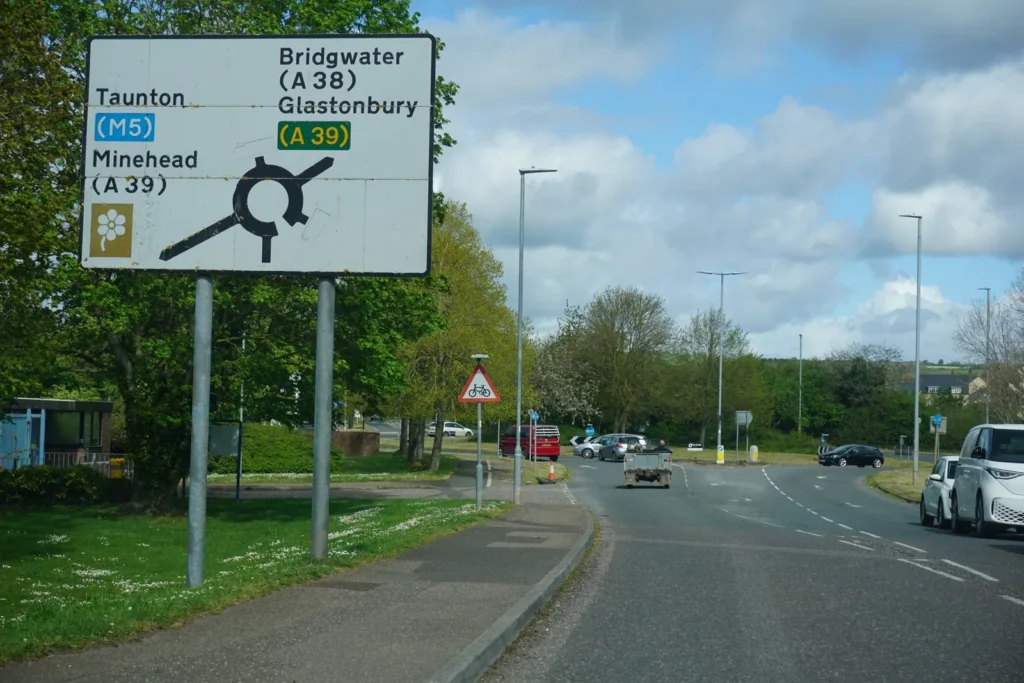
The test never uses motorways, but it can use almost every other kind of road. Since 24 November 2025, routes include more high speed and rural roads where the area allows, alongside town driving. Practise all of these until none of them feels new:
You can also have a motorway lesson with an approved driving instructor in a car with dual controls. Read when learner drivers can drive on the motorway before you ask.
You do one reversing exercise on the test, and you only find out which one when the examiner asks. Practise every one until it feels routine:
About 1 in 7 tests also include an emergency stop. That has been the rate since 24 November 2025, down from 1 in 3, but you still need to be ready for it. Our guide to the emergency stop on your test shows how to stop quickly and stay in control.
In every manoeuvre, go slowly, keep looking all around, including behind you, and give way to anyone who comes along. You can watch each one filmed in 4K on our manoeuvres page.
Booking too early costs money and confidence. If you fail, you pay again and wait for another date. GOV.UK's advice is to take your test only when you can do everything without instruction. DVSA's Ready to Pass campaign says you are usually ready when you:
A mock driving test that tells you if you are ready is the closest thing to the real test, and Ready to Pass says 94% of learners who have taken one would recommend it. If nerves are your weak spot, read how to stay calm on the day.
There is no shortcut. DVSA's annual report for 2025 to 2026 says around 50% of learners fail their test at the first attempt. Your best chance of being in the other half is to meet every point on that list before you book, then rehearse the whole test with mock tests on the kinds of road you will meet.
You book the practical test yourself on GOV.UK. Since 12 May 2026, only the learner can book, change, swap or cancel a car test. A weekday test costs £62, and evenings, weekends and bank holidays cost £75.
Waits are still long. The median wait in Great Britain was 9.7 weeks in May 2026, and much longer at some centres. Our guide to driving test wait times and how to get a test sooner has the figures and the full rules. If you plan to use a family car rather than your instructor's, check the rules for taking the test in your own car before you book.
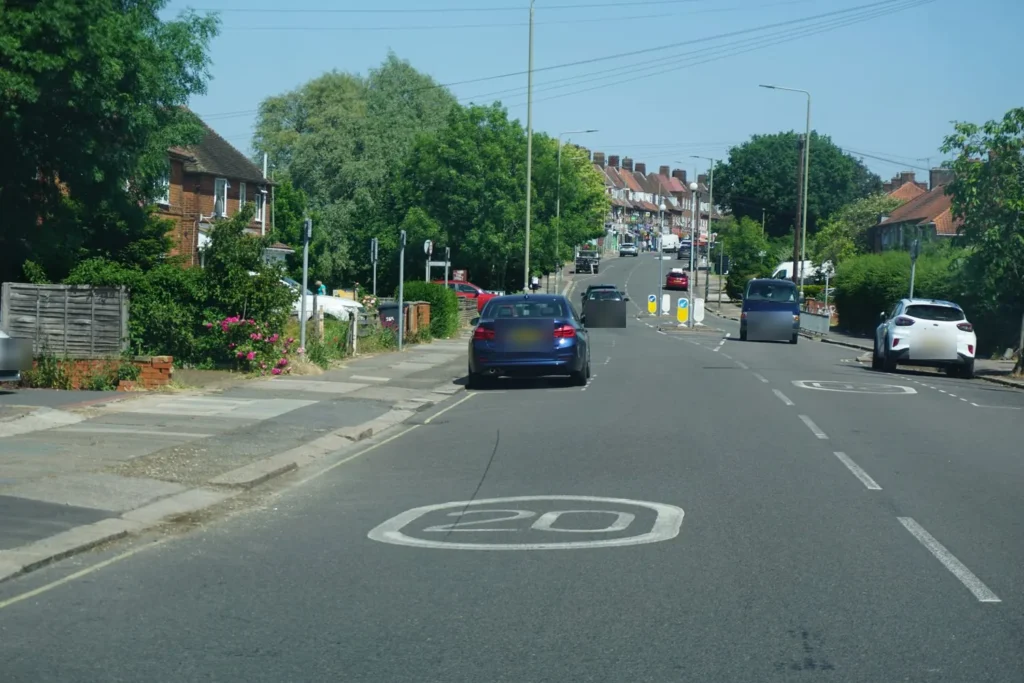
GOV.UK says driving test routes are not published, so you cannot check them before your test. What you can do is learn the area: the roundabouts, junctions, speed limit changes and lane layouts on the roads around your centre.
That is why we filmed the roads around test centres across England in 4K. Each centre page shows the roads learners around that centre drive most often, and the fail points to watch for there. Find your test centre, watch the roads, and take what you see into your next lesson.
Watching is not a substitute for driving. Use it to know what is coming, then practise it for real with your instructor.
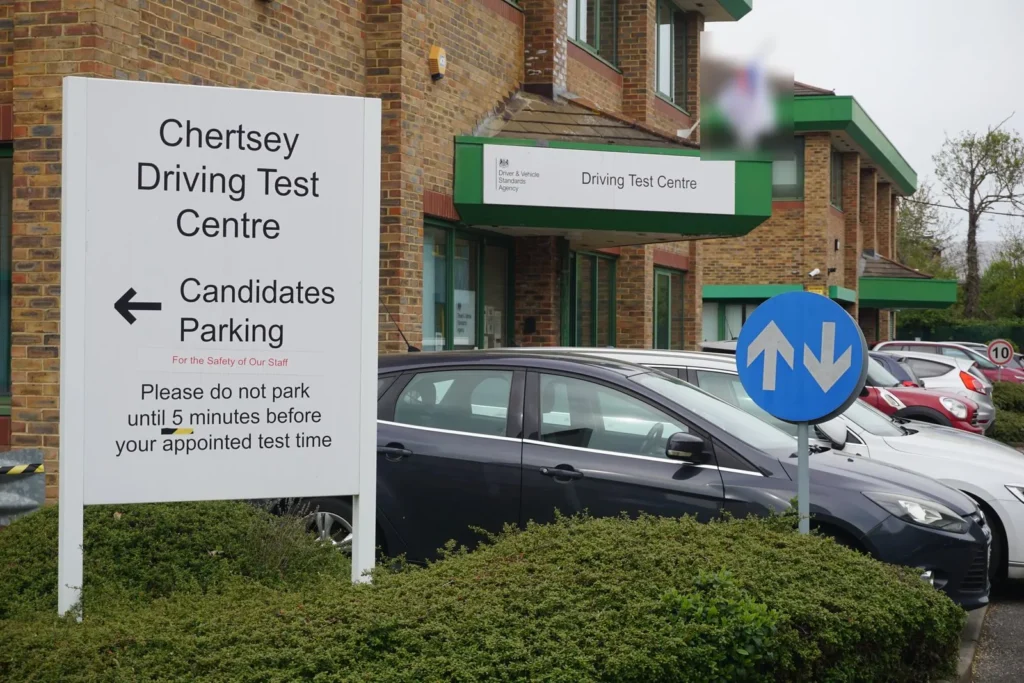
On the day you need your photocard licence, your theory test pass certificate if you have it, and a car that meets the rules. Our checklist of what to bring explains what happens if something is missing. Arrive 5 minutes before your appointment.
The test takes about 40 minutes, with around 35 minutes of driving:
After the checks at the start, the order can change. Our minute by minute guide to the test explains each part.
DVSA publishes the most common reasons for failing. The latest list covers tests from April 2024 to March 2025, and every item on it is a habit you can practise:
Our guide to the top 10 reasons people fail the driving test explains each one in more depth.
Failing is common, and it is not the end. Between April 2025 and March 2026, 1,000,043 of the 1,998,608 car tests taken in Great Britain were passes, about 50%, on provisional figures.
If you fail, you book another test, pay again and take it at least 10 working days later. The examiner tells you your faults, so use that time to work on them. Our guide to what to do after you fail your driving test covers retakes and when an appeal is possible, and our guide to pass rates and how to read your centre's puts local figures in context.
Each topic page lists every guide we have on that subject. For the practical test in one place, read our 12 chapter driving test e-book.
See all guides on the driving test.
See all guides on faults and results.
See all guides on junctions and roundabouts.
See all guides on roads and crossings.
See all guides on learning to drive.
Book only when you can drive without prompts and pass mock tests with no serious or dangerous faults. Around half of learners fail at the first attempt, so preparation matters more than luck.
Up to 15 driving faults, often called minors. One serious or dangerous fault means a fail, however few minors you have.
There is no minimum. Studies quoted by the government in 2026 found that new drivers report an average of 37 to 52 hours with an instructor and 13 to 20 hours of private practice.
Work on observation at junctions, mirror checks and moving off safely, because those top DVSA's list of reasons for failing. Then rehearse with mock tests, and keep driving calmly after any mistake.
Yes, but only in about 1 in 7 tests since 24 November 2025. Practise it anyway, because you will not know in advance whether yours includes one.
Last checked: 13 October 2026.
